MicroLaserPeel vs. Chemical Peel for Acne Scars
The Acne Scar Treatment Dilemma
Your breakouts finally cleared, but the scars stayed behind. It’s one of the more frustrating experiences in skincare, and you’re not alone in wondering what to do next. When it comes to MicroLaserPeel vs chemical peel for acne scars, both are among the most talked-about resurfacing options today, and each brings something different to the table.
Quick answer: MicroLaserPeel tends to work best for shallow atrophic scars and textural irregularities thanks to precise laser depth control, while chemical peels are often the stronger pick for post-inflammatory hyperpigmentation and surface tone concerns. For mixed scarring, a combination plan usually produces the strongest results.
So which one is right for your skin? That depends on the type of scars you have, your skin tone, your lifestyle, and how much downtime you can realistically take. In this guide, we’ll explain how both treatments work, where each one works best, and how to choose between them. By the end, you’ll have the information you need to have a productive conversation at your consultation.
Understanding Acne Scars: Types and Formation
Before comparing treatments, it helps to understand what you’re actually treating. Acne scars aren’t all the same, and matching the treatment to the scar type is the most important step.
- Atrophic scars are depressed scars that form when the skin loses collagen during healing. They fall into three main categories:
- Ice pick scars are narrow, deep, and V-shaped, often described as looking like small puncture marks.
- Boxcar scars are wider with sharper edges and a shallow-to-medium depth.
- Rolling scars create a wavy, uneven texture across the skin surface.
- Hypertrophic and keloid scars are raised scars, more common on the chest, shoulders, and back than the face.
- Post-inflammatory hyperpigmentation (PIH) isn’t technically a scar. It’s a dark mark left after inflammation, and it often fades on its own or with pigment-focused treatments.
Why does this matter? Because scar depth and structure guide everything. A shallow boxcar scar can respond beautifully to skin resurfacing, while an ice pick scar usually needs a deeper, more targeted approach.
What Is a MicroLaserPeel?
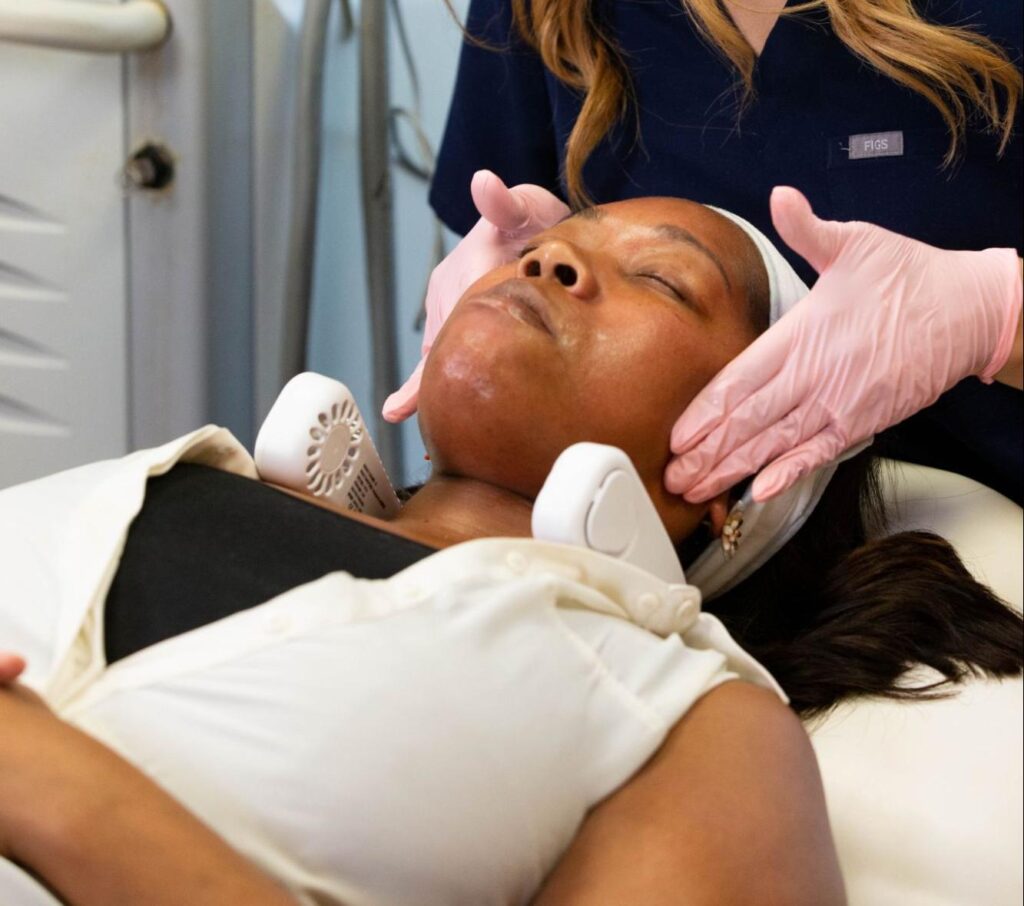
A MicroLaserPeel is a precision laser skin resurfacing treatment that removes a controlled layer of the epidermis to reveal fresher skin and stimulate collagen remodeling underneath. It’s often performed using Sciton’s Erbium:YAG laser platform, which allows your provider to dial in the exact ablation depth, sometimes just a few microns at a time.
Here’s what makes it appealing for acne scarring:
- Precision depth control. Because the Erbium:YAG wavelength is highly absorbed by water in the skin, the laser removes tissue cleanly with minimal heat spread to surrounding areas.
- Collagen remodeling. As your skin heals, it produces new collagen, which helps smooth out shallow textural irregularities.
- Short in-office session. Most treatments take around 30 minutes, often with a topical numbing cream for comfort.
- Main benefits. Improved skin texture, softened fine lines, more even tone, and reduced appearance of shallow atrophic scars.
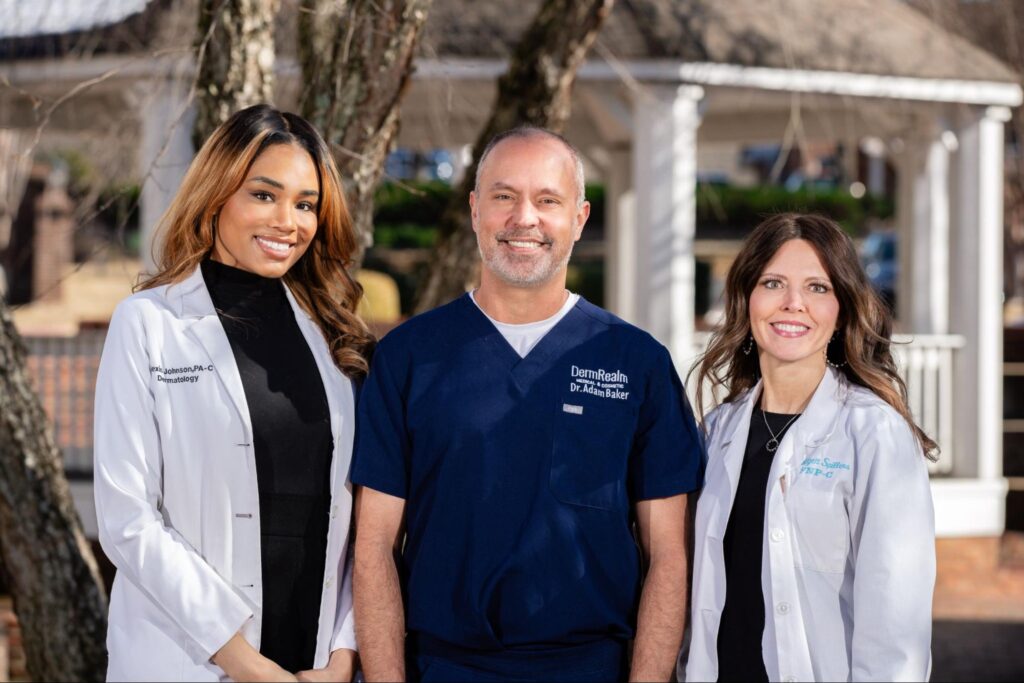
At Dermatology Realm in Germantown, our team tailors the depth of your MicroLaserPeel service to your skin type and scar profile.
What Is a Chemical Peel?
A chemical peel uses a topical acid solution to exfoliate the skin at a controlled depth, triggering renewal of the outer layers. Chemical peels have been a workhorse of dermatology for decades, and they come in three main categories based on depth.
Superficial Peels
These use milder acids like glycolic acid and salicylic acid. They gently exfoliate the outermost layer of the skin and are often used for surface texture, mild discoloration, and PIH. Downtime is minimal.
Medium-Depth Peels
These typically use trichloroacetic acid (TCA). They reach into the upper dermis and can improve moderate textural concerns, sun damage, and some atrophic scarring. Expect a few days of peeling and redness.
Deep Peels
Deep peels, such as phenol-based formulas, penetrate more deeply and are used for advanced concerns. They require careful patient selection and a longer healing period, and they’re not typically the first choice for most acne scar patients.
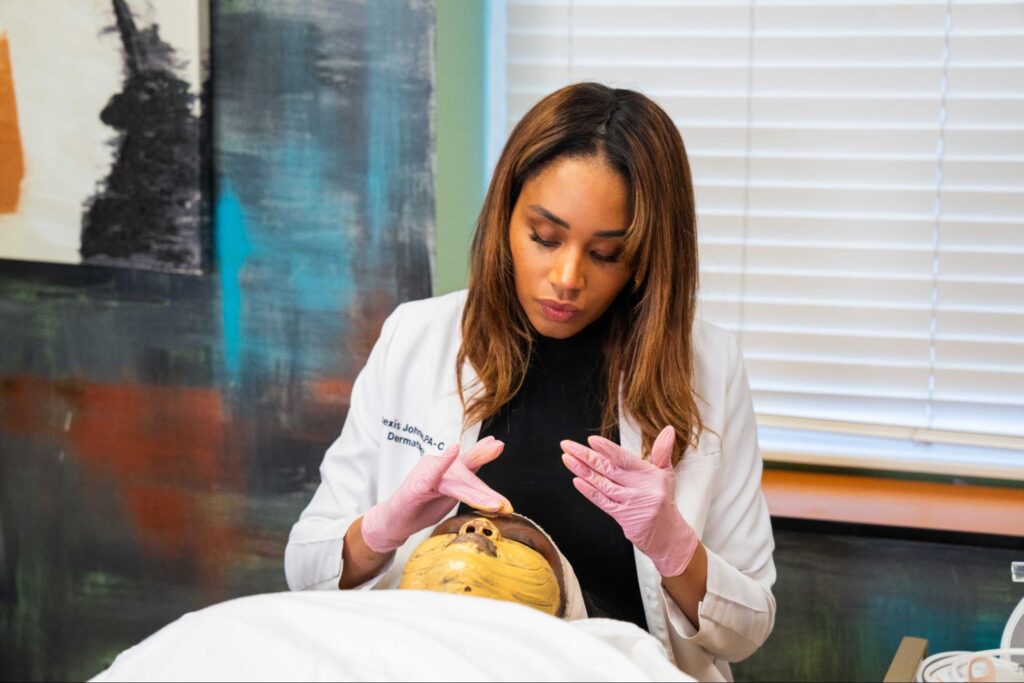
Across all depths, the concept is the same: the acid removes damaged layers, the skin renews itself, and new collagen forms during healing. Learn more about our chemical peel service options.
Laser Peel vs. Chemical Peel: Direct Comparison
Here’s a side-by-side look at how these two acne scar removal options stack up.
| Feature | MicroLaserPeel | Chemical Peel |
|---|---|---|
| Mechanism | Laser ablation (Erbium:YAG) | Chemical exfoliation (acids) |
| Depth Precision | Very high, adjustable in microns | Depth varies by acid and concentration |
| Comfort Level | Topical numbing typically used; virtually painless for most | Mild tingling to warm stinging depending on depth |
| Skin Tone Compatibility | Suitable for many skin types with proper settings; extra care for Fitzpatrick IV-VI | Superficial peels often well-tolerated across skin tones; medium/deep peels need caution for darker tones |
| Downtime | Typically 3-5 days of peeling and redness | 1-2 days (superficial) up to 10-14 days (deep) |
| Results Timeline | Visible improvement in 1-2 weeks; continued collagen changes over months | Varies by depth; superficial results are subtle, medium peels show more dramatic change |
| Best For | Shallow atrophic scars, texture, tone | PIH, surface texture, mild-to-moderate scarring |
The short version: MicroLaserPeel offers more precise depth control and consistent results for textural scarring, while chemical peels work best for pigmentation and surface refinement, especially in a series.
Ready to talk through your options? Book a consultation with Dr. Baker to review your scar type and build a custom treatment plan.
Which Treatment Works Best for Which Scar Type
Different scars respond to different tools. Here’s how they generally match up.
Ice Pick Scars
Because these scars are deep and narrow, surface resurfacing alone often isn’t enough. Deeper interventions or combination approaches tend to work better, and your provider may recommend adding a modality like microneedling to reach the base of the scar.
Boxcar Scars
Shallow to medium boxcar scars can respond well to MicroLaserPeel. The precision ablation smooths the sharp edges and encourages collagen to fill in the depression over time.
Rolling Scars
Rolling scars often benefit from combination approaches. A MicroLaserPeel can improve overall texture, while microneedling can address the tethered tissue underneath.
PIH and Discoloration
If your main concern is dark marks rather than true scarring, chemical peels are often the go-to. Superficial peels with glycolic or salicylic acid help lift pigment and even tone with minimal downtime.
Recovery, Downtime, and Results Timeline
One of the biggest factors in choosing a treatment is how much time you can set aside for healing.
MicroLaserPeel recovery typically involves 3-5 days of redness, mild swelling, and light peeling. Most patients feel comfortable returning to work within a few days, and makeup can usually be applied once the skin has fully sloughed. New skin looks smoother and brighter within a week or two, with continued collagen improvement over several months.
Chemical peel recovery depends on depth:
- Superficial peels: 1-3 days of light flaking; makeup often the next day.
- Medium peels: 5-7 days of visible peeling; more noticeable improvement.
- Deep peels: 10-14 days of healing, with strict aftercare.
For meaningful acne scar improvement, most patients need a series. A common plan involves 3-6 sessions spaced 4-6 weeks apart, followed by maintenance treatments.
How Much Do MicroLaserPeel and Chemical Peels Cost?
Cost varies based on your provider, geographic area, and how customized your treatment is. In general:
- MicroLaserPeel sessions tend to sit in the mid-to-higher range of resurfacing treatments due to the technology involved.
- Superficial chemical peels are typically the most budget-friendly per session but require more sessions for scar improvement.
- Medium-depth peels land somewhere in between.
When you’re comparing, look at total investment rather than per-session cost. A well-designed plan of 3-4 MicroLaserPeel sessions may cost more upfront than a series of superficial peels but often produces more visible textural change. Package pricing and combination protocols can offer better value than booking one treatment at a time.
Our Germantown team can walk you through pricing during your consultation so you know what to expect.
Who Are the Ideal Candidates?
Good candidates for MicroLaserPeel:
- Shallow to moderate atrophic acne scars
- Uneven skin texture and tone
- Fine lines and early photoaging
- Realistic expectations and willingness to allow short downtime
Good candidates for chemical peels:
- Post-inflammatory hyperpigmentation
- Surface texture concerns
- Mild acne scarring
- Patients who prefer a stepwise, lower-downtime approach
Considerations for darker skin tones: Fitzpatrick IV-VI skin types benefit from careful treatment selection to lower the risk of PIH. Both treatments can be used successfully with the right settings and pre/post care, but this is exactly where experienced provider guidance matters most.
Contraindications for either treatment may include:
- Active acne breakouts in the treatment area
- Pregnancy or breastfeeding
- Recent use of isotretinoin (typically within the past 6-12 months)
- Active cold sores or skin infections
- History of keloid scarring (for certain protocols)
Can You Combine MicroLaserPeel and Chemical Peels?
Yes, and in many cases the combination outperforms either treatment on its own. Here’s why: chemical peels are excellent at addressing pigment and surface texture, while MicroLaserPeel targets deeper textural change and collagen remodeling. Together, they address both pigment and texture.
A sample sequence might look like this:
- Start with a series of superficial peels to address PIH and prep the skin.
- Follow with MicroLaserPeel sessions for textural scarring.
- Add microneedling for deeper rolling and ice pick scars.
- Maintain results with periodic peels and medical-grade skincare.
Every combination should be built around your specific scar profile, skin tone, and goals. That’s the value of a custom treatment plan built by your Dermatology Realm provider in Germantown.
How to Decide: Your Consultation Checklist
Bring this list to your consultation to make the most of your time:
- Ask your provider to identify your specific scar types and depth.
- Confirm the technology being used (for MicroLaserPeel, ask if it’s the Sciton Erbium:YAG platform).
- Request before-and-after photos of patients with scar types and skin tones similar to yours.
- Ask how many sessions are recommended and how they’ll be spaced.
- Discuss pre-treatment prep, including any skincare products to start or pause.
- Clarify post-treatment care, sun protection, and expected downtime.
- Review pricing, packages, and any reward programs.
- Talk through combination options if your scars are mixed types.
Frequently Asked Questions
Which is more uncomfortable, MicroLaserPeel or chemical peel?
Both are well tolerated. MicroLaserPeel uses topical numbing and feels virtually painless for most patients. Chemical peels often produce a warm, tingling sensation that fades quickly, with deeper peels feeling more intense.
How many MicroLaserPeel sessions do I need for acne scars?
Most patients see meaningful improvement after 3-6 sessions spaced roughly 4-6 weeks apart. Your Germantown provider will personalize this based on your scar depth, skin type, and goals.
Can I get a MicroLaserPeel if I have dark skin?
Often yes, with careful settings and pre/post care to lower the risk of PIH. Experienced provider guidance and adjustable technology like the Sciton Erbium:YAG make a real difference. Your consultation will confirm fit.
Which is safer for sensitive skin?
A superficial chemical peel is often a gentler starting point for sensitive skin. That said, a low-depth MicroLaserPeel can also be well tolerated. Your provider will recommend the safest option based on your skin history.
How soon can I wear makeup after each treatment?
After a superficial peel, often the next day. After MicroLaserPeel, most patients can apply makeup once the skin has fully finished peeling, typically around day 4-5. Always follow your provider’s specific aftercare instructions.
Find the Right Treatment for Your Skin
The best treatment for your acne scars really does depend on your scar type, skin tone, comfort with downtime, and long-term goals. MicroLaserPeel offers precision resurfacing that works best for textural scarring, while chemical peels bring flexible, layered options especially useful for pigmentation and surface refinement. For many patients, the strongest outcome comes from a thoughtful combination.
The most important step is a personalized evaluation with a provider who can look at your skin, identify the how and why of the underlying problem, and build a plan around it. At Dermatology Realm in Germantown, TN, Dr. Baker and our team use advanced Sciton technology and evidence-based protocols to help you see smoother texture and more even tone.
Ready to move forward? Book a personalized acne scar consultation at our Germantown office to determine whether MicroLaserPeel, a chemical peel, or a combination is right for you.